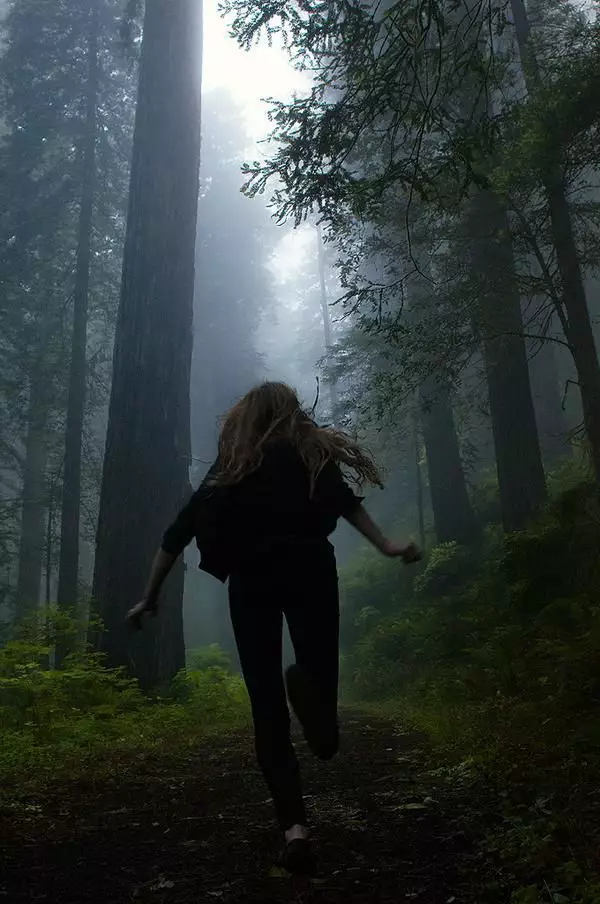
On what we lose when we mistake speed for living
Most of us are very good at being busy.
We have refined it into something close to an art form — the full calendar, the back-to-back schedule, the sense of productive motion that carries us from morning to evening without too many uncomfortable pauses. We have learned to equate movement with meaning, busyness with worth, the absence of stillness with the presence of a life being well-used.
But there is a cost to this that we rarely stop long enough to calculate. A hidden tax levied on every hour spent in motion rather than presence. A slow, cumulative subtraction from something that does not replenish itself automatically: the quality of your own experience of being alive.
May, it seems to me, is the month that invites us to look at this honestly.
The Life That Passes While You Are Managing It
Here is what rushing through your own life actually looks like from the inside.
It looks like arriving somewhere and not quite remembering the journey. It looks like eating a meal without tasting it, having a conversation while composing the reply to the last one, watching your child do something remarkable with the particular distracted attention of someone who is present in the room but not in the moment.
It looks like a day that ends with the feeling of having done a great deal and experienced very little. Like a week that passes in a blur of tasks completed and demands met and a background sense — never quite examined, always slightly present — that something is being missed. Not a specific something. Just the quality of your own life, moving past you slightly faster than you can receive it.
This is not a failure of character. It is a failure of conditions. The conditions in which most of us are trying to live do not support the kind of presence that makes a life feel genuinely inhabited. They support efficiency, productivity, the seamless management of competing demands. But inhabiting your own life requires something different. It requires the willingness to slow down enough to actually be in it.
What Presence Actually Costs
Presence has a cost that is rarely acknowledged honestly: it costs time. Not enormous amounts of time — presence is not the same as leisure, and a full and demanding life can still be a fully inhabited one. But it costs the small, deliberate pauses that allow the experience of a moment to actually register before it has passed.
The thirty seconds at the kitchen window before the day begins. The genuine attention given to the meal rather than the screen beside it. The walk taken at a pace that allows noticing, rather than the pace of someone who has somewhere to be. The moment between tasks where you close your eyes briefly and simply feel where you are.
These are not indulgences. They are the basic conditions of a life that feels lived rather than managed. And their absence — the absence of these small deliberate pauses — is what creates that sense of being slightly outside your own experience. Present in the technical sense. Absent in the one that matters.
We are not short of days. Most of us will have many thousands more. But the days that are moved through at speed, without sufficient attention, do not accumulate into a life in the way that the attended days do. They pass. And the passing of them does not feel like anything much, which is precisely the problem.
The Small Choices That Bring You Back
The antidote to rushing through your own life is not, for most of us, a sabbatical or a dramatic slowing-down of everything. It is something considerably more achievable: the small, repeated choice to be actually present in the moments that are already occurring.
It is choosing to eat the meal rather than manage the meal. To have the conversation rather than process the conversation. To take the walk as a walk rather than as an opportunity to plan the afternoon. To receive the morning rather than immediately deploy it.
These choices are available every day, in the ordinary conditions of an ordinary life. They don’t require a different schedule or a different set of circumstances. They require the decision — made quietly, privately, without announcement — that the moment you are in is worth your full attention.
And what you find, when you make that decision consistently, is something that is genuinely surprising to the person who has been rushing: the moments you are fully in feel longer. Richer. More worth having been alive for. The day that ends with genuine presence in it feels different from the day that ends with only tasks completed. The week that has been actually inhabited feels different from the week that has merely passed.
This is not a small difference. It is, in the end, the difference between a life and a record of one.
The Invitation of May
May is at its best in the slow moments. The long evenings when the light stays late and there is no particular urgency about what comes next. The mornings that haven’t yet been claimed by anything. The ordinary Tuesday that contains, if you are present enough to notice, the warmth of the cup, the sound of the street, the particular way the air smells when the window is open.
These are not supplementary to the life. They are the life, in its most essential form — the irreducible experience of being conscious and present in a world that is offering itself, continuously and without fanfare, to anyone willing to be still enough to receive it.
You do not need to have fewer things to do. You only need to be more fully present in the doing of them.
Begin with one thing. Just one. The next meal, or the next walk, or the next conversation with someone you love. Bring your whole attention to it. Resist the pull toward the next thing.
Notice what is actually there when you do.
“The life that passes while you are managing it is still your life. The question is whether you were present enough to receive it.”
With warmth,
Joanne.
Leave a Reply