A monthly letter from Joanne, September 2026.
Opening Ritual
Come in, dear friend.
Something is different in the air this month.
The light has changed — not suddenly, but with the particular unhurried authority of a season that knows it does not need to announce itself. It simply arrives. The mornings are different. The evenings, which closed earlier this week than last, carry a quality that is both melancholy and beautiful, which is what the best September evenings always are.
This is harvest time.
Not the harvest of fields — though the fields are at it too, if you look — but the interior harvest. The season of looking honestly at what the year has actually produced in you. Not what you planned, not what you hoped, not what you might have produced in better conditions. What actually grew.
This month we gather truths, let go of what is finished, and begin to realign with what is true. It is quieter work than the summer asked for. Slower. More inward.
September is not asking you to do more. It is asking you to see more clearly what is already there.
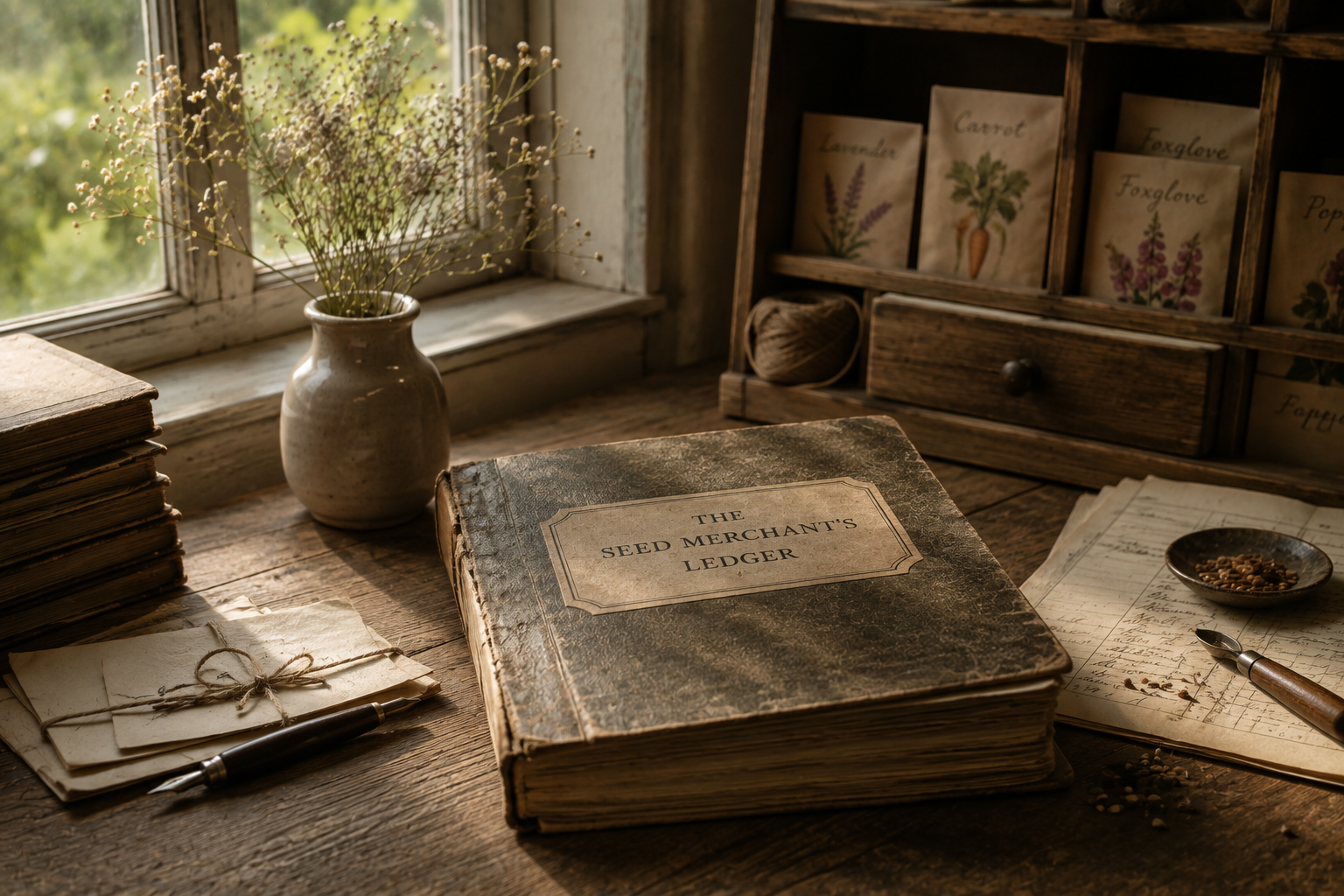
The teaching tale this month is called The Seed Merchant’s Ledger. It is the story of a woman who has spent her life dealing in potential — in the seeds of things not yet grown — and who, in her final season of trading, does something she has never done before: she opens the ledger of what was planted and what grew, and she looks at it honestly.
Settle in. This story is for you.
— ✦ —
THIS MOON’S TALE – a short story about reflection.
“The Seed Merchant’s Ledger”
Agnes had been selling seeds for forty-one years.
Not the packets in garden centres with the glossy photographs of what might grow. The proper kind. Heritage varieties, open-pollinated, saved from the previous season’s best specimens and stored through the winter in paper envelopes with their names written in her own hand. She knew her seeds the way a librarian knows books: by what was inside them, by what they were capable of, by the particular conditions under which they were most likely to become what they were supposed to be.
She had kept a ledger.
Not every merchant kept one. Many kept records on computers now, which were efficient and searchable and which contained none of the quality she valued most in the ledger, which was the handwriting. Forty-one years of handwriting. You could read a person’s year in their handwriting, if you knew how to look. The years of difficulty had a different pressure on the page. The good years wrote with a looseness she could see, even now, as something close to happiness.
She was closing the business in October. She was seventy-one and healthy and the business was as alive as it had ever been. But she was closing it because she understood, with the quiet certainty of someone who has been attending to natural cycles for four decades, that this was the right moment. That there was a season for everything, and that her season was complete.
She had spent September going through the ledger. Not to account for stock or check orders or perform any of the practical functions a ledger serves. She had gone through it for another reason entirely: she wanted to know what had grown.
Not the seeds. She knew what they did. She wanted to know what she had grown. What the forty-one years of this particular work had produced in her. What had actually flourished in the conditions of this particular life, and what had needed more than the life could give.
It took three weeks.
Subscribe to get access
Read more of this content when you subscribe today.
Leave a Reply